
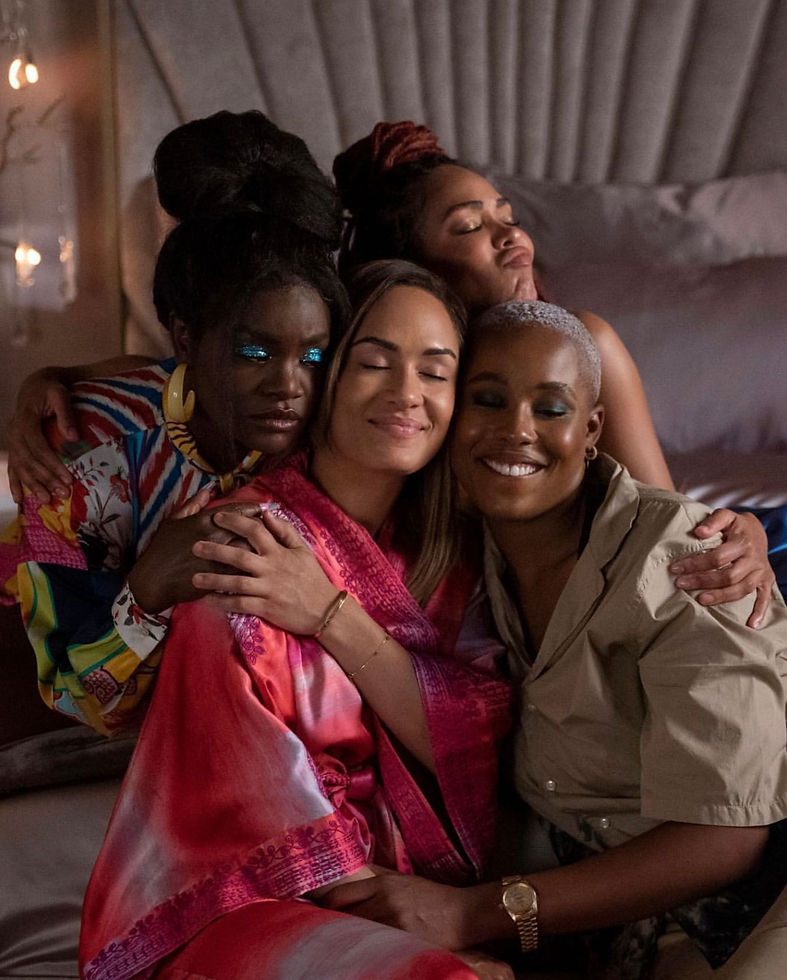
Navigating Friendship as an Adult: When the Friendships We Thought Would Last Forever Change
Relationships are hard. But no one really prepares you for how hard it can be to navigate friendship as an adult.
We talk so much about romantic relationships—the breakups, the red flags, the communication, the boundaries, the growing pains. But what about friendships?
What happens when the people you thought would be in your life forever start to feel like people you no longer recognize?
Recently, I was talking with a friend I’ve known since middle school, and somehow, the conversation kept coming back to friendships.
Maybe it’s because we’re at an age where life has changed so much. Marriage. Motherhood. Careers. Family responsibilities. Personal growth. Loss. Healing. New priorities.
And somewhere along the way, we started asking ourselves a question that can be incredibly uncomfortable:
What happens when the friendships that carried us through one season no longer fit the women we’ve become?
Sisterhood Can Carry Us
There is something incredibly special about sisterhood.
Friends have been there for some of our most vulnerable moments. They’ve held us when we cried, celebrated our biggest accomplishments, listened to the things we couldn’t say out loud, and reminded us who we were when life made us question ourselves.
Some friendships have literally helped us survive seasons we didn’t think we’d make it through.
And that’s why losing or even redefining a friendship can hurt so much.
Because you’re not just grieving a person.
Sometimes, you’re grieving years of memories, inside jokes, traditions, experiences, and the version of yourself that existed within that friendship.
You’re grieving the future you imagined having together.
The trips you thought you’d take.
The milestones you thought you’d celebrate.
The “we’ll be friends forever” you genuinely believed.
And sometimes, the hardest part is realizing that forever doesn’t always mean the way you imagined it would.
When the Friendship You Thought Was Forever Starts to Shift
I can recall when my friendship with my childhood friend someone I’ve known since middle school started to shift.
And honestly, it felt like the worst feeling in the world.
This wasn’t just a friend.
She was more than that.
She was a bonus sister.
We had grown up together. We had shared experiences, memories, different seasons of life, and versions of ourselves that not everyone else had the privilege of knowing.
So when things started to feel different between us, I had to sit with some uncomfortable questions.
Were we still compatible?
Were we growing in different directions?
Had we changed so much that the friendship we once knew couldn’t exist in the same way anymore?
Those questions hurt because sometimes you don’t want the answer.
You want history to be enough.
You want love to be enough.
You want all those years together to guarantee that the friendship will always work.
But adulthood teaches us that history alone can’t sustain a relationship.
People grow.
Priorities change.
Perspectives change.
And sometimes, friendships change with us.
But here’s the part of the story I’m grateful for:
Our friendship survived.
We went through our rough patch, we had the difficult conversations, we listened to each other, and ultimately, we came out of it better than we were before.
Not perfect.
Not finished growing.
But better.
We’re still learning each other.
We’re still learning ourselves.
And we’re still growing as we grow.
That experience taught me something important:
A friendship going through a difficult season doesn’t automatically mean the friendship is over.
Sometimes it means the friendship needs to evolve.
Sometimes people need to be honest about what isn’t working.
Sometimes we need to take accountability for the ways we’ve contributed to the disconnect.
Sometimes we need to extend grace.
And sometimes, we need to give each other room to become different people without assuming that different automatically means disconnected.
But unfortunately, not every friendship survives that process.
And that’s okay, too.
Then Life Happens
I think adulthood has a way of revealing things that childhood and young adulthood allow us to overlook.
When you’re younger, friendship can be built around proximity.
You go to school together. You live near each other. You go out together. You have similar schedules. You share the same social circles.
But adulthood introduces distance, responsibilities, different priorities, and perhaps most importantly growth.
And growth can reveal things we didn’t have the capacity, experience, or willingness to see before.
You start noticing patterns.
You realize you’ve been giving more than you’ve been receiving.
You realize you’ve been making excuses for behavior that you would never accept from someone else.
You realize you’ve been avoiding difficult conversations because you didn’t want to lose the friendship.
You realize you’ve tolerated things simply because you’ve known someone for so long.
And then comes the uncomfortable realization:
Longevity doesn’t automatically equal compatibility.
Knowing someone for 10, 15, or 20 years doesn’t mean you are required to continue accepting behavior that no longer aligns with who you are.
The Accountability We Avoided I think one of the hardest parts of adult friendship is recognizing our own role in unhealthy dynamics.
Sometimes we want to blame the other person.
And sometimes they genuinely have hurt us.
But if we’re being honest with ourselves, there may also be moments where we allowed things to continue because addressing them felt harder than tolerating them.
We let things slide.
We didn’t speak up.
We accepted apologies without changed behavior.
We convinced ourselves, “That’s just how she is.”
We stayed quiet because we didn’t want to create conflict.
We accepted being disappointed because we didn’t want to lose the friendship.
And eventually, resentment can grow where communication should have been.
Then one day, something happens that makes you realize:
I don’t think I can keep doing this anymore.
Not because of one argument.
Not because of one disagreement.
But because years of little things have finally become too heavy to carry.
Sometimes the Friendship No Longer Serves You
This phrase gets thrown around a lot:
“That friendship no longer serves me.”
But I think we should be careful with it.
People aren’t disposable.
Friendships aren’t supposed to exist only when someone is convenient, entertaining, useful, or beneficial to us.
Sometimes a friendship can still be filled with love and yet no longer be healthy for where you are in life.
That’s a very different conversation.
You can love someone and still need boundaries.
You can appreciate everything someone has meant to you and still recognize that the relationship has changed.
You can be grateful for the memories and still decide that you don’t want to recreate them.
And perhaps most importantly:
You don’t have to make someone a villain in order to acknowledge that the friendship no longer works for you.
Sometimes nobody is the villain.
Sometimes two people simply grew in different directions.
And sometimes there was hurt, betrayal, or a lack of accountability that needs to be acknowledged.
Both things can be true.
But Why Does It Still Hurt?
This is the part nobody really talks about.
You can know that a friendship isn’t healthy for you anymore and still miss your friend.
You can know that setting a boundary was necessary and still cry afterward.
You can feel peace about your decision one day and sadness about it the next.
You can be angry.
You can be disappointed.
You can question whether you should have handled things differently.
You can even wonder if you’ve become too guarded or if you’re expecting too much.
That’s grief.
And friendship grief is real.
We’re often taught how to grieve romantic relationships, but there isn’t much language for grieving a friendship.
There isn’t always a funeral for the relationship.
Sometimes there isn’t even a final conversation.
Sometimes the friendship just becomes quieter.
The texts become less frequent.
The invitations stop.
The conversations become surface-level.
And eventually, you realize you’re no longer part of each other’s everyday lives.
There is a particular kind of heartbreak in watching a friendship slowly become a memory.
Maybe Growing Up Means Relearning Friendship
As adults, I think we’re learning that friendship requires more than history.
It requires communication.
Mutual respect.
Accountability.
Reciprocity.
Boundaries.
Grace.
And the willingness to have uncomfortable conversations.
Healthy friendship doesn’t mean you’ll never hurt each other.
It means there is enough love and respect to address the hurt when you do.
It means you can say, “That hurt me,” without being punished for having feelings.
It means accountability doesn’t automatically become an attack.
It means your boundaries aren’t treated like rejection.
And it means both people are willing to ask:
“How can we do better?”
Not every friendship will survive that conversation.
But perhaps that’s part of growing up too.
Some Friendships Stay. Some Don’t.
My own experience taught me that friendships don’t always have to end when they become difficult.
Sometimes they need to be rebuilt.
Sometimes they need new boundaries.
Sometimes they need honest conversations that we’ve been avoiding.
Sometimes they need forgiveness.
Sometimes they simply need time.
And sometimes, despite everyone’s best efforts, the friendship doesn’t survive.
And that’s okay, too.
We have to stop viewing every friendship that ends as a failure.
Some friendships are meant to carry us through a particular season.
Some friendships grow with us.
Some friendships need to be redefined.
And some friendships, no matter how much history exists, reach their natural ending.
None of that erases what the friendship meant.
The Friendships That Stay
I’m learning that the goal isn’t necessarily to have a large circle.
It’s to have a safe one.
Friends who can celebrate you without competing with you.
Friends who can call you out without humiliating you.
Friends who can apologize without making you feel guilty for being hurt.
Friends who can evolve with you.
Friends who don’t require you to abandon yourself to maintain the relationship.
Friends who can hold space for the woman you were, the woman you are, and the woman you’re becoming.
And maybe that’s what sisterhood really means.
Not perfection.
Not always agreeing.
Not never hurting each other.
But creating relationships where we feel safe enough to be honest, vulnerable enough to grow, and loved enough to be accountable.
Because sometimes the hardest part of adulthood isn’t making new friends.
It’s accepting that some friendships we thought would last forever may have already served their purpose.
And that doesn’t make the friendship meaningless.
It means it mattered.
It means it helped shape you.
It means there was a season where you needed each other.
And sometimes, honoring that season means allowing yourself to let it change.
Maybe forever was never about how long the friendship lasted.
Maybe forever was about the impact it had on you.
And perhaps the most loving thing we can do—for ourselves and for each other is to stop forcing friendships to remain what they once were and start making room for what they can honestly become.
Because relationships are hard.
But navigating sisterhood as an adult?
That’s a whole conversation of its own.

Comments